


Views: 0 Author: Site Editor Publish Time: 2026-11-06 Origin: Site


Table of Contents
Is there a true facelift in a bottle? For years, the beauty industry chased the elusive promise of topical regeneration. Today, copper peptides are radically transforming modern beauty routines. We are witnessing a massive shift away from harsh, stripping treatments toward profound cellular repair.
Naturally occurring in the human body, the Glycyl-L-Histidyl-L-Lysine copper complex, commonly known as GHK-Cu, dictates how our skin heals and maintains its youthful bounce. Unfortunately, our natural baseline levels drop significantly as we age. This biological decline causes the dermal matrix to lose firmness, leading to sagging, thinning, and structural fatigue.
In this comprehensive guide, we unpack the science behind these formulations. Whether you are a cosmetic chemist navigating strict pH rules or a brand owner looking to optimize your product line, you will discover the mechanisms, ingredient conflicts, and advanced applications that make this tripeptide a gold-standard active.
Potent Anti-Aging Properties: Clinically observed to stimulate collagen and elastin production, making it a highly regarded ingredient for firming the skin and repairing structural damage.
Strict Formulation Rules: Requires a highly specific pH range, typically between 5.0 and 7.0, to maintain optimal stability and efficacy.
Crucial Ingredient Conflicts: Highly reactive molecules. Never layer directly with strong chemical exfoliants such as alpha hydroxy acids or pure Vitamin C to prevent peptide bond degradation.
Versatile Product Applications: Demonstrates high efficacy across various cosmetic formats, ranging from lightweight water-based serums to advanced hydrogel delivery systems.
Label Transparency and Dosing: Efficacious products feature a concentration ranging between 0.1 percent and 2 percent. Concentrations exceeding this limit can trigger localized oxidative stress.
Understanding the biological impact of this trace mineral compound requires a look at its origins. Researchers first identified the complex in human plasma in 1973. They noted its profound ability to modulate gene expression, effectively resetting cellular health to a younger, more vibrant state. As human bodies age past twenty, the natural concentration in the blood drops significantly. This drop correlates directly with a sharp decrease in tissue regenerative capacity.
Looking at recent dermatological market data, there is a massive paradigm shift within the global cosmetic sector. Consumers are actively moving away from aggressive chemical peels and embracing skin longevity and barrier-supporting formulations. Global search trends for biocompatible peptides have surged dramatically. Formulators are heavily investing in non-invasive, regenerative skincare solutions that offer clinical-level results without the associated downtime. This macro-trend perfectly explains why topical copper complexes have become the focal point of modern skin science.
One of the most documented benefits of the tripeptide complex is its ability to rebuild the structural matrix. When applied topically, it penetrates the stratum corneum and acts as a signaling molecule. It communicates directly with fibroblasts, which are the specialized cells responsible for generating connective tissue. By stimulating these fibroblasts, the active upregulates the synthesis of both collagen for structural support and elastin for bounce and flexibility. Clinical observations indicate that consistent application visibly reduces the depth of fine lines and improves overall skin density. In contrast to high-strength retinoids, it achieves this dermal remodeling without chronic irritation.
Beyond cosmetic anti-aging, the medical field initially researched this ingredient heavily for tissue repair. The peptide possesses remarkable anti-inflammatory properties that help accelerate the natural healing cascade. Specifically, it promotes the production of glycosaminoglycans, such as hyaluronic acid, and modulates the activity of metalloproteinases. These enzymes break down damaged proteins in the skin. This dual action makes the active exceptionally beneficial for repairing a compromised barrier, soothing micro-tears, and calming the skin following professional dermatological procedures.
Environmental stressors, such as UV radiation and urban pollution, generate free radicals that accelerate premature aging. The copper complex acts as a potent antioxidant system by neutralizing these damaging molecules. Furthermore, it significantly reduces the release of inflammatory cytokines. For individuals dealing with sensitive skin or conditions like rosacea, this offers a much gentler, soothing alternative to harsh actives. It delivers robust anti-aging benefits while actively calming reactive redness.
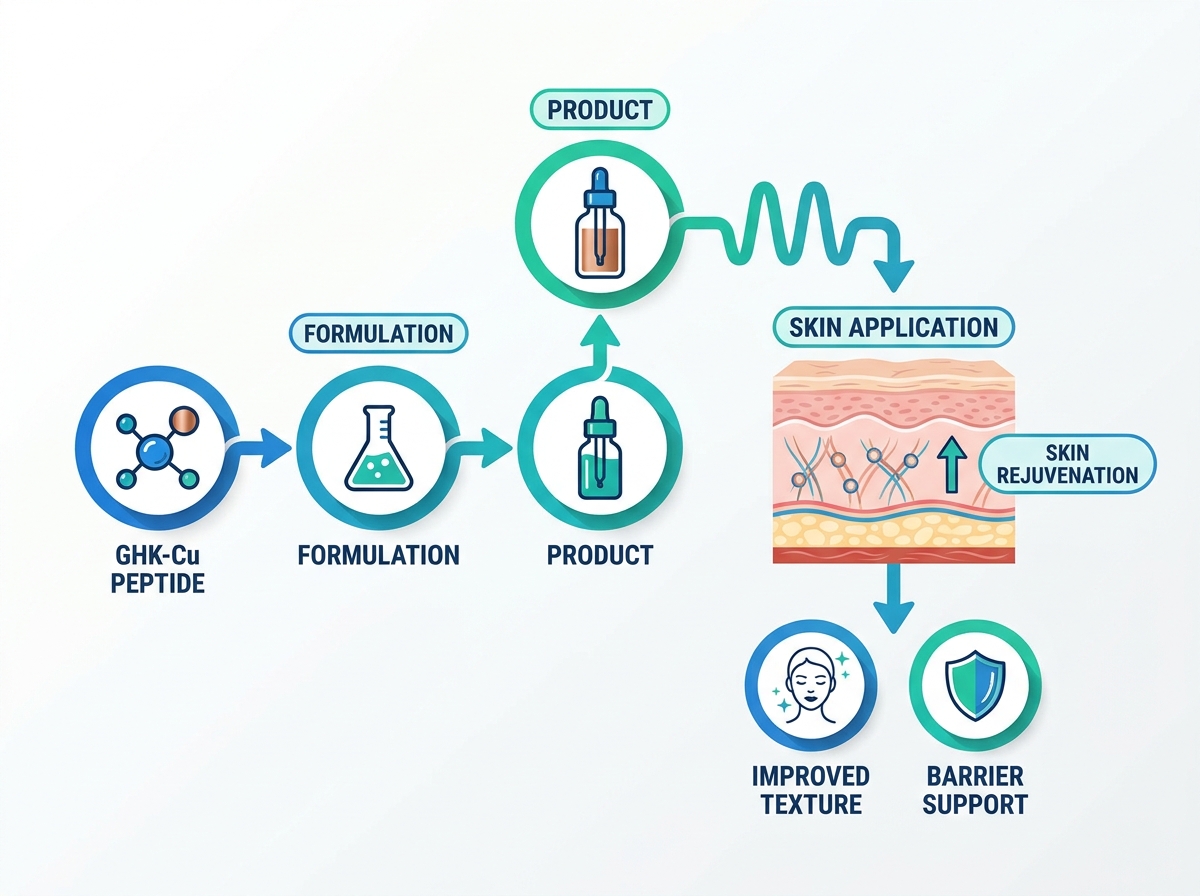
For cosmetic chemists and brand developers, working with this active requires a deep understanding of peptide chemistry. While it is a highly effective ingredient, it is notoriously fragile. Ensuring the stability of the copper ion and the integrity of the tripeptide chain requires strict adherence to specific manufacturing parameters.
Raw Copper Tripeptide-1 is supplied as a vibrant blue, highly water-soluble powder. Because it dissolves seamlessly in aqueous phases, it is ideal for serums, toners, and light lotions. However, thermal degradation is a massive risk. Exposing the peptide to elevated temperatures denatures the protein structure entirely. When managing the cooling phase in the mixing tank, dropping the base emulsion to a safe 35 degrees Celsius is critical. Specifically, this is the exact moment to introduce the pre-dissolved active, ensuring the delicate molecular bonds remain intact during the final cool-down.
The pH level of a formulation is arguably the most critical factor in stability. The complex requires a strictly controlled environment, optimally balanced between 5.0 and 7.0. If the formulation becomes too acidic, falling below a pH of 5.0, the chemical bonds holding the copper ion to the peptide begin to break down. When the copper ion detaches, the formulation loses its regenerative properties, and the free copper can cause localized oxidation. Conversely, a highly alkaline environment will also destabilize the compound. Formulators must carefully buffer their bases before adding the active.
When designing a new product, formulation engineers must meticulously screen their ingredient lists for chemical conflicts. Chelating agents, such as Disodium EDTA, are designed to bind to free metal ions to stabilize cosmetic formulas. Unfortunately, EDTA cannot distinguish between rogue metals and beneficial copper. It will actively strip the copper from the peptide, destroying the active entirely. In addition, high concentrations of strong acids will push the pH out of the safe zone.
To overcome these formulation hurdles, engineering a premium delivery system requires locking the active into a cross-linked polymer network. A prime example of this advanced engineering is the GHK-Cu Copper Peptide Hydrogel Face Mask. This specific product utilizes a precise concentration threshold combined with a perfectly buffered hydrogel base. This environment prevents copper ion detachment while maximizing dermal absorption through thermodynamic pressure.
With the surge in popularity of regenerative beauty, the cosmetic market is flooded with products claiming to harness these benefits. However, not all copper ingredients are created equal. Consumers and brand buyers must learn to decode International Nomenclature of Cosmetic Ingredients lists to ensure they are sourcing efficacious, high-quality formulas.
To guarantee you are utilizing the genuine active, look for the specific designation: Copper Tripeptide-1. This exact nomenclature indicates the presence of the complex backed by clinical research. Many generic brands use cheaper, less effective alternatives and market them under the vague umbrella term of copper peptides. Ingredients like Saccharomyces Copper Ferment or generic Copper PCA offer some trace mineral benefits, but they do not possess the specific collagen-stimulating, gene-modulating capabilities of true Copper Tripeptide-1.
Clinical studies demonstrating efficacy in topical applications generally utilize concentrations ranging from 0.1 percent to 2 percent. For daily maintenance and gradual anti-aging benefits, a concentration of 1 percent is widely considered the optimal baseline for maximum results and skin tolerability. Using concentrations exceeding 2 percent can lead to a phenomenon colloquially known as the copper uglies. Overloading the skin with copper induces localized oxidative stress, temporarily resulting in a dull, crepey, or fatigued complexion.
One of the most distinct physical characteristics of authentic Copper Tripeptide-1 is its vivid, natural blue color. When formulated at effective concentrations, the final serum or cream will naturally possess a distinct periwinkle or azure hue. If a brand heavily markets a high-strength product, yet the fluid dispensed is entirely clear or stark white, it is highly probable that the formula is severely under-dosed.
Incorporating this potent active into a daily regimen requires a strategic approach. Because of its reactive nature, you cannot simply mix it haphazardly with other strong acids or vitamins. Structuring your routine correctly ensures maximum absorption and prevents accidental deactivation.
You can utilize these products in both morning and evening routines, depending on your specific aesthetic goals. Dermatologists often recommend applying them at night. During sleep, the skin undergoes its natural cellular turnover processes. Providing the fibroblasts with restorative peptides during this window maximizes tissue repair. Alternatively, using them in the morning leverages their robust antioxidant properties, helping to neutralize free radicals generated by UV exposure throughout the day.
To ensure maximum absorption and minimize the risk of degradation, follow this optimal layering sequence. Picture applying your evening regimen. After cleansing, you gently pat the azure-tinted fluid into your slightly damp skin, feeling an immediate cooling slip before sealing it.
Cleanse: Use a gentle, pH-balanced cleanser to prepare the face without stripping its natural acid mantle.
Tone: Apply a hydrating, non-astringent toner. Ensure it does not contain high levels of exfoliating acids.
Apply the Active: Following the thinnest to thickest rule, apply your water-based serum. For intensive repair days, incorporate soothing copper peptide treatments directly onto slightly damp skin to massively enhance penetration.
Moisturize: Follow up with a barrier-repairing cream to lock in the moisture and prevent transepidermal water loss.
The fragility of the molecular structure means it plays exceptionally well with certain hydrating ingredients but reacts poorly with others. Managing these chemical interactions is the absolute key to a successful, safe, and highly effective regimen.
Avoid layering the following ingredients in the exact same routine as your peptides:
Vitamin C: Pure Vitamin C, known chemically as L-Ascorbic Acid, requires a highly acidic pH below 3.5 to remain stable. This instantly degrades the peptide. Furthermore, the copper can oxidize the Vitamin C, rendering both ingredients completely ineffective and causing localized oxidation that mimics blackheads.
Direct Acids: Glycolic, lactic, and salicylic acids drastically lower the surface pH of the skin, breaking the fragile bonds of the complex.
Strong Retinoids: While not a direct chemical conflict in the beaker, applying prescription-strength retinoids alongside copper peptides can overwhelm the skin barrier. It is best practice to alternate nights.
To boost the efficacy of your routine, pair your active with supportive, hydrating ingredients:
Hyaluronic Acid and Glycerin: These humectants draw moisture into the epidermis, creating a hydrated environment that facilitates better cellular penetration.
Ceramides: Ceramides work synergistically to rebuild the lipid barrier, accelerating overall healing.
Niacinamide: A highly stable antioxidant that pairs beautifully with peptides to brighten the complexion, reduce redness, and improve elasticity without any pH conflicts.
Ingredient Category | Compatibility Profile | Formulation Interaction / Clinical Reason |
|---|---|---|
Hyaluronic Acid | Highly Compatible | Enhances hydration and facilitates deeper active penetration into the dermal layers. |
Niacinamide | Highly Compatible | Delivers synergistic anti-inflammatory and skin-firming effects without pH disruption. |
Ceramides | Highly Compatible | Supports structural barrier repair alongside the natural peptide healing cascade. |
L-Ascorbic Acid | Do Not Mix | Triggers rapid oxidation. The required low pH instantly degrades delicate peptide bonds. |
Alpha/Beta Hydroxy Acids | Do Not Mix | The highly acidic environment destroys the molecular complex upon contact. |
As formulation technology advances, cosmetic chemists are finding new, highly effective vehicles to deliver Copper Tripeptide-1 into the epidermis. Choosing the right product format depends largely on individual skin types, specific aesthetic goals, and desired penetration speeds.
Water-based serums and concentrated ampoules remain the most popular delivery systems. Because the peptide is inherently water-soluble, it formulates seamlessly into lightweight liquids. These formats boast a smaller molecular weight profile, allowing the actives to bypass the surface layers of the skin rapidly. If you have an oily or acne-prone profile, serums are your ideal choice. They deliver potent anti-aging benefits without relying on pore-clogging heavy lipids.
For individuals dealing with dry, mature, or highly reactive skin, the active is frequently incorporated into richer emulsions. In these formulations, the lipid-rich base acts as a physical buffer, intentionally slowing down the penetration rate. This sustained release minimizes the risk of irritation, making it exceptionally suitable for the delicate, thin tissue around the orbital bone.
One of the most exciting innovations in modern peptide delivery is the use of occlusion therapy via hydrogel technology. Hydrogel masks are composed of a cross-linked polymer network that holds vast amounts of water. When applied to the face, the material creates a physical barrier that halts the evaporation of the serum, forcing the active ingredients to absorb deeply into the stratum corneum rather than dissipating into the air.
If your target is rapid post-procedure recovery or intensive weekly repair, occlusion therapy is unmatched. A high-quality copper peptide hydrogel mask leverages thermodynamic pressure to push reparative peptides deep into the tissue. The cooling nature of the hydrogel matrix provides an instant soothing effect. It rapidly reduces vasodilation and redness, while the concentrated active works to deliver a visible, immediate plumping result.
Copper peptide formulations offer unparalleled anti-aging and wound-healing benefits, effectively bridging the gap between cosmetic enhancement and biological tissue repair. By stimulating structural proteins and calming inflammation, this active helps rebuild your complexion for a noticeably firmer, healthier look.
To maximize these benefits, you must respect the chemistry. Always check the ingredient list for true Copper Tripeptide-1, ensure the formulation respects the delicate pH balance, and look for that signature vivid blue tint. Most importantly, strictly avoid mixing these fragile molecules with strong acids or pure Vitamin C.
Take a moment to review your daily routine or your brand's product lineup today. Consider swapping out harsh, barrier-damaging chemicals for high-quality peptide solutions. Ready to elevate your skincare standards? Explore the advanced regenerative formulations at Aixin Cosmetics to find the perfect restorative solution tailored to your clinical or daily needs.
Yes, copper peptides are generally considered highly safe and exceptionally beneficial for sensitive skin types. Unlike harsh chemical exfoliants or strong retinoids that can strip the lipid layer and cause disruption, this active operates primarily as an anti-inflammatory and reparative agent. It naturally regulates the production of inflammatory cytokines, helping to calm redness and soothe reactive tissue. Dermatologists frequently recommend it for patients recovering from aesthetic procedures like microneedling.
The timeline for visible results depends on the specific biological process being targeted. For immediate benefits, such as increased hydration, reduced redness, and a superficial plumping effect, users may notice improvements within the first one to two weeks of consistent use. However, the true structural anti-aging benefits, specifically the synthesis of new collagen and elastin fibers, require a longer biological cycle. Fibroblast activation and dermal remodeling typically take four to twelve weeks of daily application.
Yes, daily use is highly encouraged to maintain a steady-state concentration of the peptide in the tissue. For optimal results, incorporate it into your nighttime routine to align with the natural circadian rhythm of cellular regeneration. The critical factor for daily use is ensuring that the peptide is not layered simultaneously with conflicting active ingredients like direct acids.
This is a colloquial term used to describe a paradoxical reaction where the overuse of the active temporarily causes the skin to look dull, crepey, or fatigued. Scientifically, this occurs when the skin is exposed to excessively high concentrations, typically well above the recommended 2 percent threshold. An overload of copper ions can over-activate metalloproteinases, leading to a temporary state where collagen degradation outpaces synthesis. Sticking to properly dosed formulations easily prevents this issue.
Yes, it can be highly effective in the management and reduction of acne scars. Acne scarring is essentially the result of abnormal collagen production and chronic inflammation. The peptide addresses this by modulating the tissue remodeling phase. It helps break down the disorganized, rigid collagen bundles that form scar tissue and replaces them with normal, healthy collagen, gradually smoothing the texture while reducing post-inflammatory red marks.
A common misconception in the beauty community is that copper peptides stimulate unwanted facial hair. While formulators extensively use these peptides in scalp serums to promote hair follicle health and thickness, they do not generate new hair follicles on the face. They simply support the health of existing tissue. Vellus hair on the face remains completely unaffected by topical application.
Refrigeration is not strictly necessary for commercially stabilized products, but it can significantly extend the shelf life of the delicate peptide bonds. Storing your serums or hydrogel masks in a cool, dark environment prevents premature oxidation. Furthermore, applying a chilled hydrogel mask provides enhanced vasoconstriction, immediately reducing facial redness and inflammatory puffiness.


